Showing posts with label Connectivity. Show all posts

Sunday, October 9, 2016

Connectivism


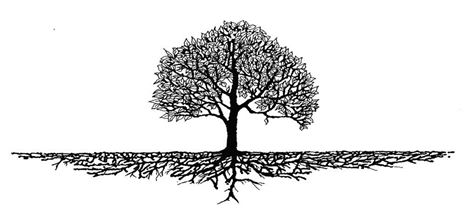
By reading the article “Connectivism: A Learning Theory for the Digital Age” by George Siemens and watching the listed videos, I gain deeper understanding about learning, especially some new observations of learning in the digital age. With technologies nowadays, there is abundant information available in the internet, and a learner may search information and learn through Google, YouTube, or some social networks. I like the viewpoint in the article and the videos that learning is a process of connecting a learner with information sources. I feel that a learner is like a tree root system: a learner searches and acquires information through on-line digital world just likes tree roots growing and expanding deep in the soil to obtain water and nutrients. Finding useful information from the internet, one may have to search from website to website and eventually get the right information, so the connection between a leaner and the information source may not be direct and it can be zigzag. This is similar to that tree roots may expand in all directions and zigzag to reach water and nutrients.    

Dr. Siemens also explained how internet technologies have created new opportunities for people to learn and share information across the world. He pointed out that “New information is continually being acquired. The ability to draw distinctions between important and unimportant information is vital, and the ability to see connections between fields, ideas, and concepts is a core skill.” I agree that a key feature of connectivism is that much learning can happen across peer networks that take place online. In connectivist learning, a teacher can guide students to information and answer key questions as needed, in order to support students learning and sharing on their own. Students are also encouraged to seek out information on their own online and express what they find. Teachers should be facilitators to help guide students through the learning process. It would be great that students can make more connections and reflect on the process of learning. As emphasized by Dr. Siemens that learners successfully acquire greater profile will be more successful at acquiring additional connections.
I like the video “What is Connectivism” which uses simple language to explain the concept of connectivism in learning. Dr. Siemens explained that “knowledge is networked and distributed, the experience of learning is one of forming new neural, conceptual and external networks”. Learning and connecting learners with information sources are increasingly aided by new technologies especially on-line social networks. To better help students learning in the new digital age, we need to better understand the fundamental of learning, we need to better understanding how and why connections form between learners and information sources. With new and better understanding of learning, we are able to better design our classrooms, better create our curriculum, better teach subjects, and better connect students with knowledge.

Connectivism Through Social Network


In the video “AlanLevine-New Media Consortium”, Mr. Alan Levine addressed the importance of establishing networks through colleagues, experimenting and trying new things with technology in teaching. It is really important and beneficial for a teacher to participate and learn through social networking and build connection with other teachers and students.

I joined a social network called Classroom 2.0, which is a useful social networking platform to provide information sources and technologies for teaching and learning in classrooms. Classroom 2.0 allows teachers and students to participate in the discussion forums, receive event notifications, find and connect with other colleagues. Classroom 2.0 have more than 80,000 members from about 200 countries. Anyone can register at the social network, once a membership application is approved, one can use search box or topic list to find some related topics. You can go to the introductory forum to introduce yourself, then other users can see your profile and may make connection with you. You can also see profiles of other users and connect with them if you are interested. Classroom 2.0 provides BlackboardCollaborate, weekly Saturday “Classroom 2.0 LIVE, and monthly “Featured Teacher”. In the weekly sessions, a specific classroom teaching topic will be discussed with a special guest presenter. In the monthly sessions, a special guest will share ways of using technology to support learning in classrooms. I like the social network with the weekly and monthly live events, as this is a good opportunity to connect with other members of the community in real time events with audio, chat, sharing, and video. If you miss a live event, you can click on the “Archives and Resources” to find a saved recording. I like this social networking platform as it emphasizes the future of education series, and it has been a pioneer in the use by educators and students of open source, software, social networking and massive online peer-to-peer conference and teacher conference. From Classroom 2.0, I found that many successful educators use various technologies to connect and collaborate with their colleagues and create lessons and enhance student learning. I am going to continue using Classroom 2.0 to improve my teaching and learning.

Global Collaboration


Nowadays technologies allow schools and students to access information and resources from across the world. It is a great way to have global-collaboration projects that connect classrooms across schools, communities and counties, and bring knowledge and diverse cultures to our students. I really like the social network called Taking It Global (TIGed). TIGed is a great online social network for young people learning about, engaging with, and working towards tackling global challenges. TIGed focuses on youth around the world to actively engage, connect and prepare students for the world by utilizing technology to engage them as active learners and world citizens. TIGed helps teachers to foster deep learning competencies through real-world problem solving. There are five categories in TIGed including Community, Action Tool, Resources, Youth Media, and Global Issues. I like to use Youth Media and Community in my teaching. Under the Youth Media, a resource library called conversations on models change provides youth movement and learning from community in different countries and story telling. By using the Youth Media, my students will know communities in different countries and compare different cultures. As a second language teacher, it is important for me to introduce different cultures including target language, history, identity, and so on. With the connect Youth media, my students will learn more and better understand different cultures. By using the feature of telling stories, my students will get more opportunities to talk target language and interact with students and peers from different countries. Under the Resources of the platform, I can use the community function to find and learn different projects and then to create and implant my projects. By bringing together youth engagement, different cultures and project based practice, my students will be more interested to participate and engage critical thinking in my second language
classroom.